
Remembering the Forty-Five Days We Shared in a Summer Sinking Beneath the Sea
After finishing ATRI -My Dear Moments-: Atri, Natsuki, and that bright, fleeting summer by the sea.
Table of contents
When I first encountered ATRI -My Dear Moments-, I thought it would be an easy story to summarize: a near future after rising sea levels, a town slowly sinking beneath the waves, a boy who has lost both a leg and his direction in life, and a robot girl salvaged from a wreck on the ocean floor.
Yet after I finished the game, what stayed in my memory was not any of those premises, but an extraordinarily bright summer.
There are ruins left by the rising sea, lives constrained by energy shortages and a future with no visible way forward, and pain reaching out from the past. But whenever I look back, the first things I see are always the shade of trees, white clouds, and light upon the water. And Atri taking Natsuki’s hand as though she has no intention of letting him refuse.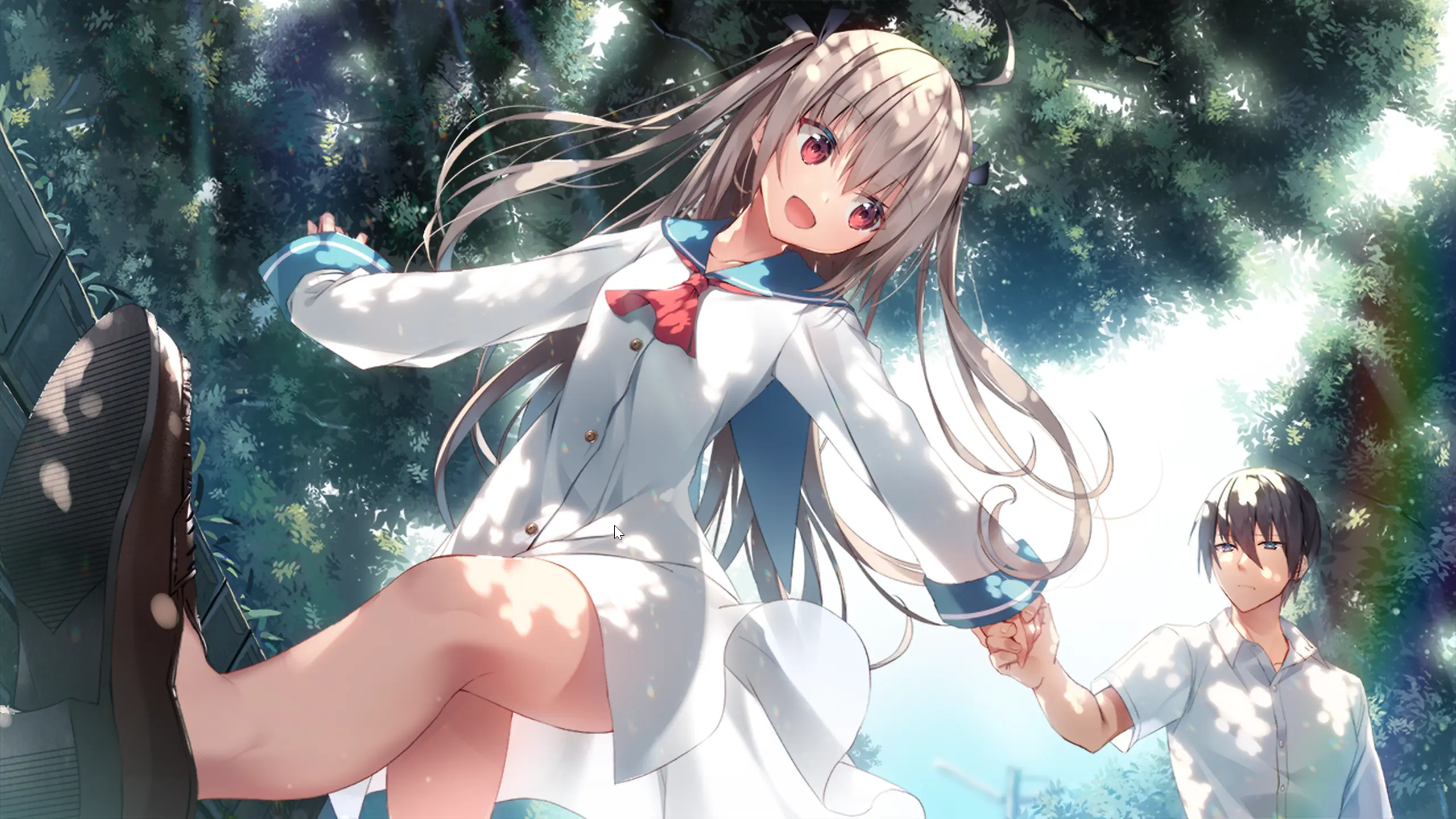
She Burst into His Life Like Summer
Atri’s arrival leaves Natsuki almost no room to remain despondent. She confidently declares herself a “high-performance” robot. She gets smug, sulks, makes a mess of things, and pulls him out of his closed-off life in the most direct way possible.
That energy matters. The story’s setting is, in truth, quite heavy: civilization is being swallowed little by little by the sea, familiar places can never be recovered, and those who remain on the island must live with limited supplies and a future they cannot make out. Natsuki resembles the town itself. On the surface he continues to live, but inside he has lost the impulse to move forward.
His prosthetic leg gives every movement a tangible weight. It is not merely a detail intended to make the character more distinctive. It is tied to the trauma of the accident and to Natsuki’s sense of his own damaged body. He returns from the city to his ocean-bound hometown with nowhere in particular to go, keeping his distance from others and expecting little of the future. Detachment is how he protects himself: if he never invests himself again, he will never have to face another loss.
Atri therefore does not “heal” him with one beautiful line. She is often noisy enough to give him a headache. She simply keeps barging into his schedule and placing the immediate problems in front of him, leaving him no time to stay trapped inside his own thoughts.
Atri is his complete opposite. Everything interests her, as though the world cannot truly be over as long as she can still run forward today.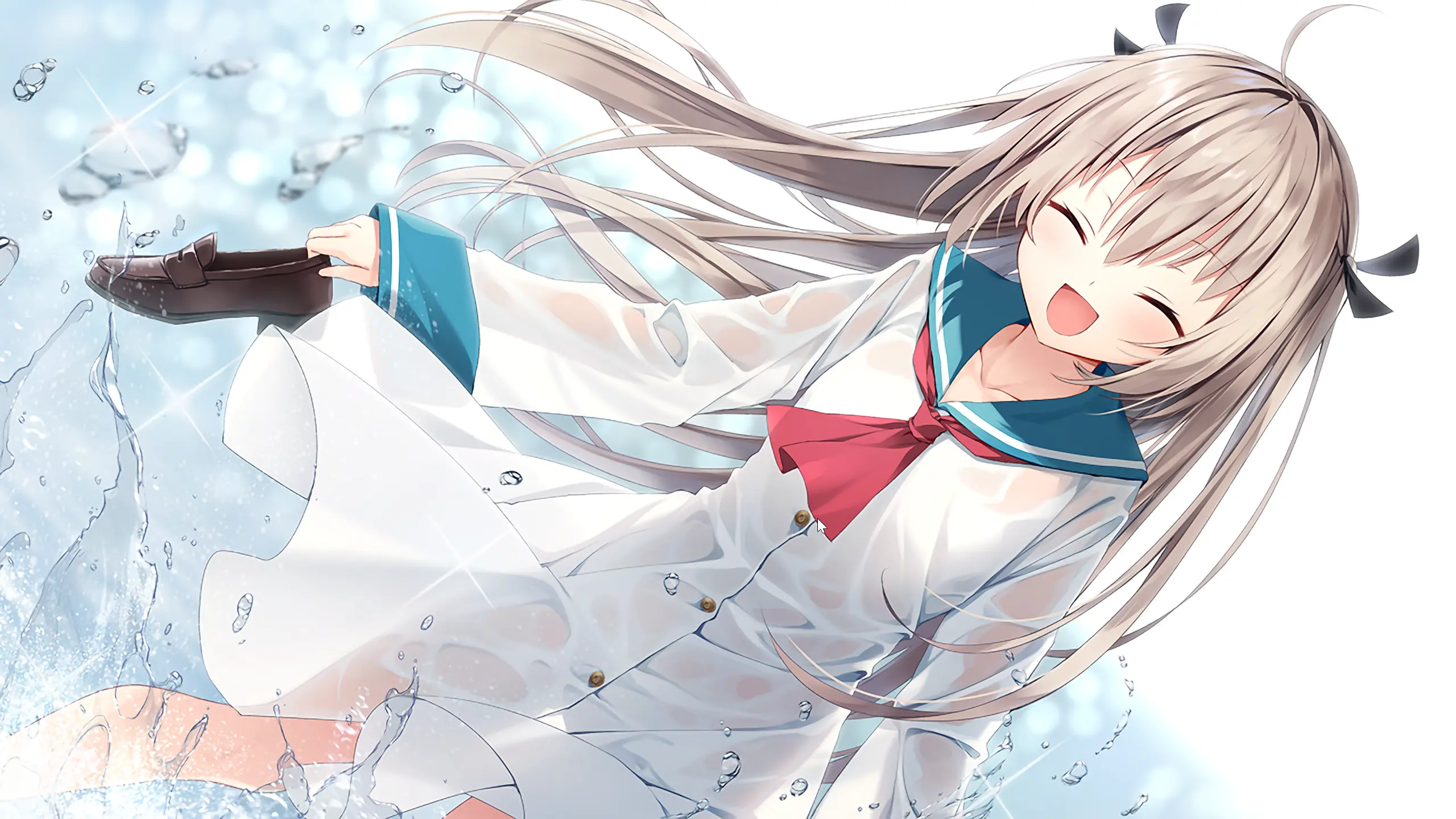
I love the small routines of the game’s first half. Repairing broken equipment, returning to school, looking for a way to power the island, and then working with everyone to turn an idea into something real. Every problem is concrete: which materials are missing, why a machine will not run, whether the lights can come on tonight. These immediate, practical questions lead Natsuki to use his knowledge again and to return to the space between people.
Generating electricity is especially important. To the islanders, power is not an abstract symbol of civilization. It means light at night, working equipment, and children able to study somewhere that feels more like a school. What Natsuki does may not reverse the rising seas or save the whole world, but it truly makes tomorrow a little better than today for the people around him.
The abandoned school likewise ceases to be merely a post-apocalyptic ruin. People sit in its classrooms. Some argue and slack off, while others seriously discuss what to do next. The building has not returned to what it was, but life has returned to it. This is how the island’s community comes together: no one is a savior; everyone simply joins the small thing they can do to what the others can offer.
Atri is always present in these everyday moments. She helps and causes trouble, breaking through the gloom with far too much confidence. As she repeatedly drags Natsuki along to solve problems, he slowly becomes accustomed to being depended on, and to answering other people’s hopes of his own accord. He does not suddenly pull himself together one morning. By repairing one thing, agreeing to one request, and going to school once more, he rediscovers the sense that he can still take part in life.
What Atri gives Natsuki, then, cannot be described as love alone. She lets him believe again that although his body carries a wound that cannot be erased, his life did not end with it. He can still solve problems, still be needed, and still reach out a hand to someone.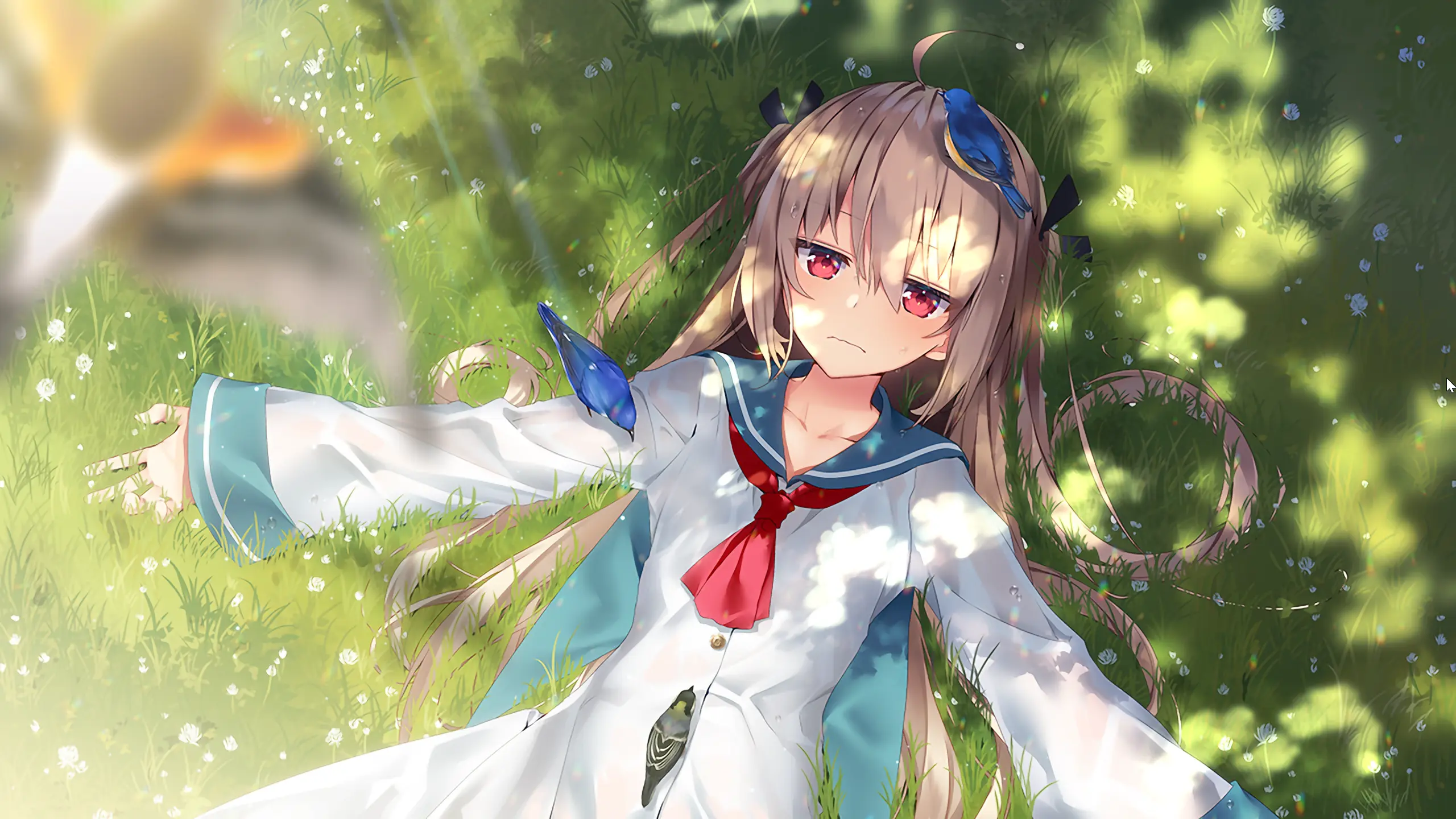
A Heart Needs No Certificate
The game keeps asking a familiar question: can a robot possess genuine emotion? What moved me about ATRI is that it never insists on technical proof.
Atri’s feelings may come from a program, and her expressions may be imitations of human behavior. Yet when a few words can hurt her, when she treasures the time they spend together, and when she makes her own choice despite knowing the ending cannot be changed, whether those feelings are “real” seems to matter much less.
The latter half of the game brings this question closer and makes it crueler. How Atri understands her own emotions, and whether Natsuki is willing to believe her, in turn changes their relationship. I wavered here too: if some of her reactions can be explained by programming, does that diminish the joy and sorrow we felt before?
But the question quickly returns to humanity itself. Human emotions are also shaped by memory, experience, and instinct. We cannot open another person’s heart and confirm that it contains a love one hundred percent pure. We can only see what they say, what they do, and what they choose when it matters. If that is enough for us to understand a person, why should Atri be required to offer more exacting proof?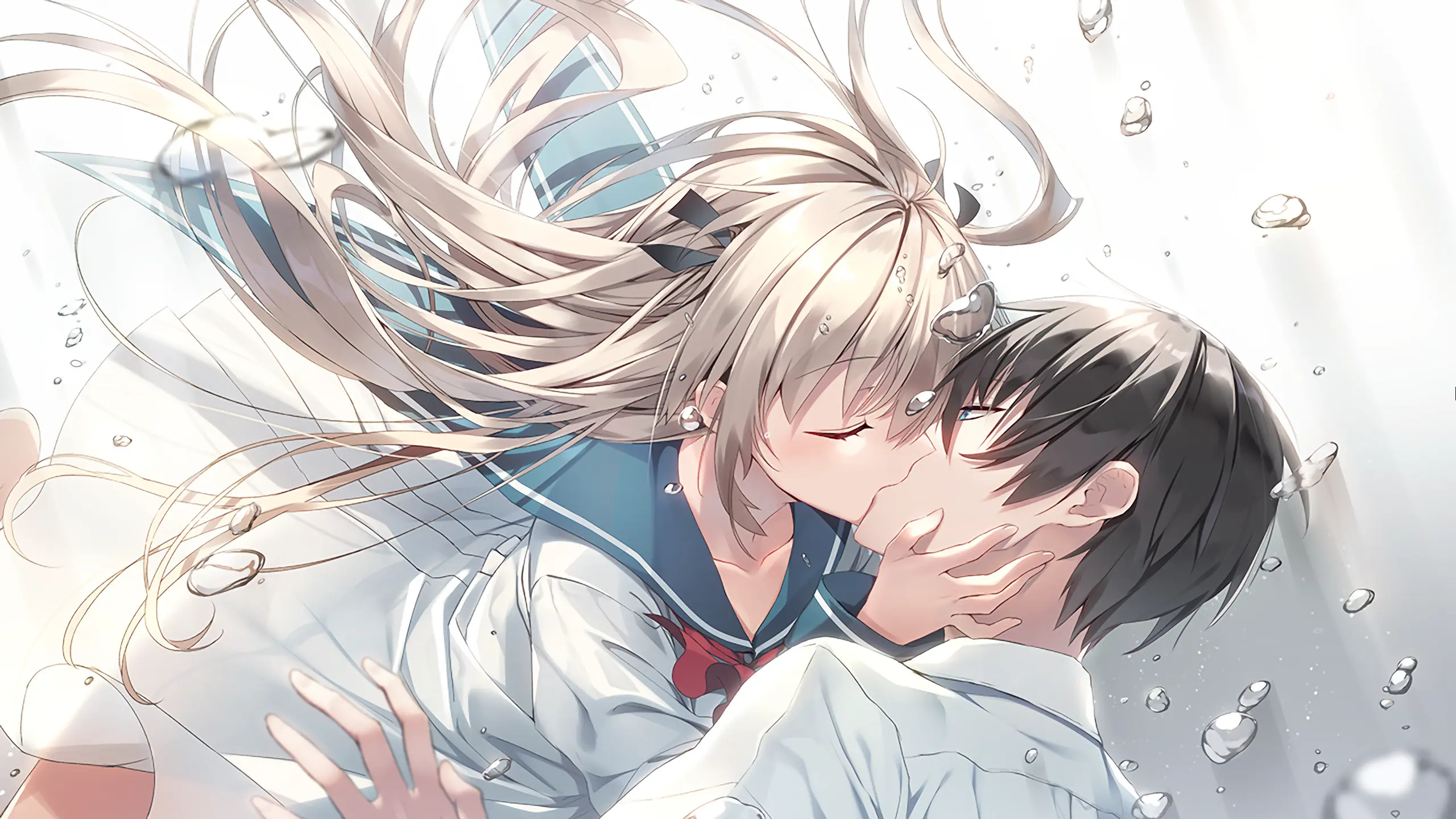
The kiss beneath the water is moving not because it finally labels their relationship as romance. At that moment, neither of them has been promised a future. They simply answer each other’s feelings within the time they have, treating a heart they cannot prove as something real.
To me, Atri is most nearly “human” not when she cries or says she loves someone, but when she finally gains the ability to choose. She no longer merely follows orders, nor is she willing to remain a replacement left behind by someone else. She knows what she wants to protect and is willing to bear the cost of her choice.
Natsuki makes a choice as well. He stops asking whether Atri can pass a test for possessing a “heart” and accepts that she has already changed him. Belief itself carries risk, especially when parting has been written into their relationship from the very beginning. Even so, he reaches out his hand.
Why Forty-Five Days Feel So Long
ATRI is not a long game, and the two of them spend only forty-five short days together. But the story does not compress that time into a handful of fate-changing events. It lets the days pass one by one.
They go to school in the morning, repair equipment by day, and worry about power and supplies. When there is time, they visit the shore, bicker with familiar faces, and spend a while looking at the stars after nightfall. Many scenes feel light when taken alone, sometimes no more than a few lively exchanges between characters. Together, however, they give life on the island a texture one can almost touch.
Gradually, I could distinguish the warmth of those days. The school holds the voices of people gathering again. The sea lies so close that it seems ready to spill over at any moment. After the generator succeeds, its light briefly returns a sense of safety to the night. Everyone on the island knows their circumstances will not easily improve, yet they remain busy preparing to study, eat, and use electricity tomorrow. This modest earnestness keeps the end of the world from becoming an empty premise.
Forty-five days thus feel longer than the number suggests. Natsuki and Atri do not merely share one miracle. They spend many ordinary mornings and evenings together. Their feelings gain places in which to settle: a classroom, a repaired machine, a road beside the sea, and an idle conversation with no special meaning that somehow remains in memory.
The story does not deny their parting. On the contrary, it reminds the player from the beginning that Atri and Natsuki’s time must eventually end. Precisely because it cannot last forever, their relationship is not a beautiful dream that can be saved and reloaded without limit, but a reality they must live with care.
The image of them embracing beneath the stars preserves this feeling for a long time. The stars seem distant and eternal, and forty-five human days are almost negligible beside them. But for the two people living through those days, they are all the time needed to change the rest of their lives.
Looking back at the title My Dear Moments after finishing the game, I feel it speaks of precisely these moments that cannot be extended, yet were lived in earnest. Being unable to keep someone forever does not rob the days shared with them of their worth. Memories may blur, but the changes those days created have already entered the life that follows.
A Bright Apocalypse, a Fleeting Summer
Though ATRI’s world is being swallowed by the sea, its art rarely paints the end of the world in gray. The ocean is a brilliant blue, sunlight falls through the leaves, and plants still grow beside abandoned buildings. Even submerged places often take on an almost dreamlike beauty through the water’s clarity and reflected light.
This brightness does not lessen the disaster. Instead, it creates a peculiar sense of distance. The old world truly will not return, but summer continues all the same. The weather grows hot, spray shines in the sun, and the sea breeze moves Atri’s hair. The characters live on land left behind by the ebb of civilization, yet the images keep telling the player that there are still things before them worth loving.
In the story, the sea is both a threat and a vessel for memory. It drowns Natsuki’s hometown and seals the past in depths that cannot easily be reached, yet also returns the sleeping Atri to his side. By day, the ocean is broad and dazzling. At night, the stars and water surround the characters with a vast quiet. The same sea therefore takes away a life and grants them one brief meeting.
The music sustains this coexistence of light and shadow. In the lively daily scenes, its melodies make the bickering and school life feel brighter. When the image turns toward the shore or night sky, the sound leaves enough room for silence. It does not constantly tell the player, “This is where you should be moved.” More often, it simply lengthens an evening a little, letting an unfinished sentence linger.
Near their parting, the melodies and images accumulated through those ordinary days return together. The sorrow is not sharp; it resembles a slowly rising tide. By the time you notice, familiar scenery has already been covered with another meaning. The sea, sunlight, stars, and sunset are therefore more than changes of setting. They create the sense of time across those forty-five days, beginning at summer’s brightest point and moving step by step toward the dusk where it must end.
This is also the work’s most vivid aftertaste for me. It tells of a world in decline, yet the colors in my memory remain bright. Sorrow does not obscure the summer; instead, it makes every ray of light feel fleeting.
A Few Regrets
ATRI is modest in scope, not a long Galgame whose many routes can be explored at leisure. Its focused main story creates a clear emotional arc, but also makes some turns fairly easy to anticipate. Some ideas about future society and rising sea levels barely take shape before the story returns to Natsuki and Atri. The island’s supporting cast is lovable, but they receive only limited time.
At times I wished the school and the island community had been explored a little further, and I wanted to see how more people lived in this world. These regrets do not shake the story’s core. It knows exactly which forty-five days it wants to portray and is willing to end when their time is over. In a sense, its brevity perfectly matches its theme: it does not explain everything until no blank space remains, but lets a finite time together leave a long enough echo.
Above the Sea, Tomorrow Still Comes
I love the feeling ATRI’s ending leaves behind. It carries regret and a romance peculiar to science fiction, yet it does not keep its characters forever inside their grief. The sea has drowned the old world, but people will still seek a new life. After a fleeting encounter ends, those left behind will go on carrying its memory.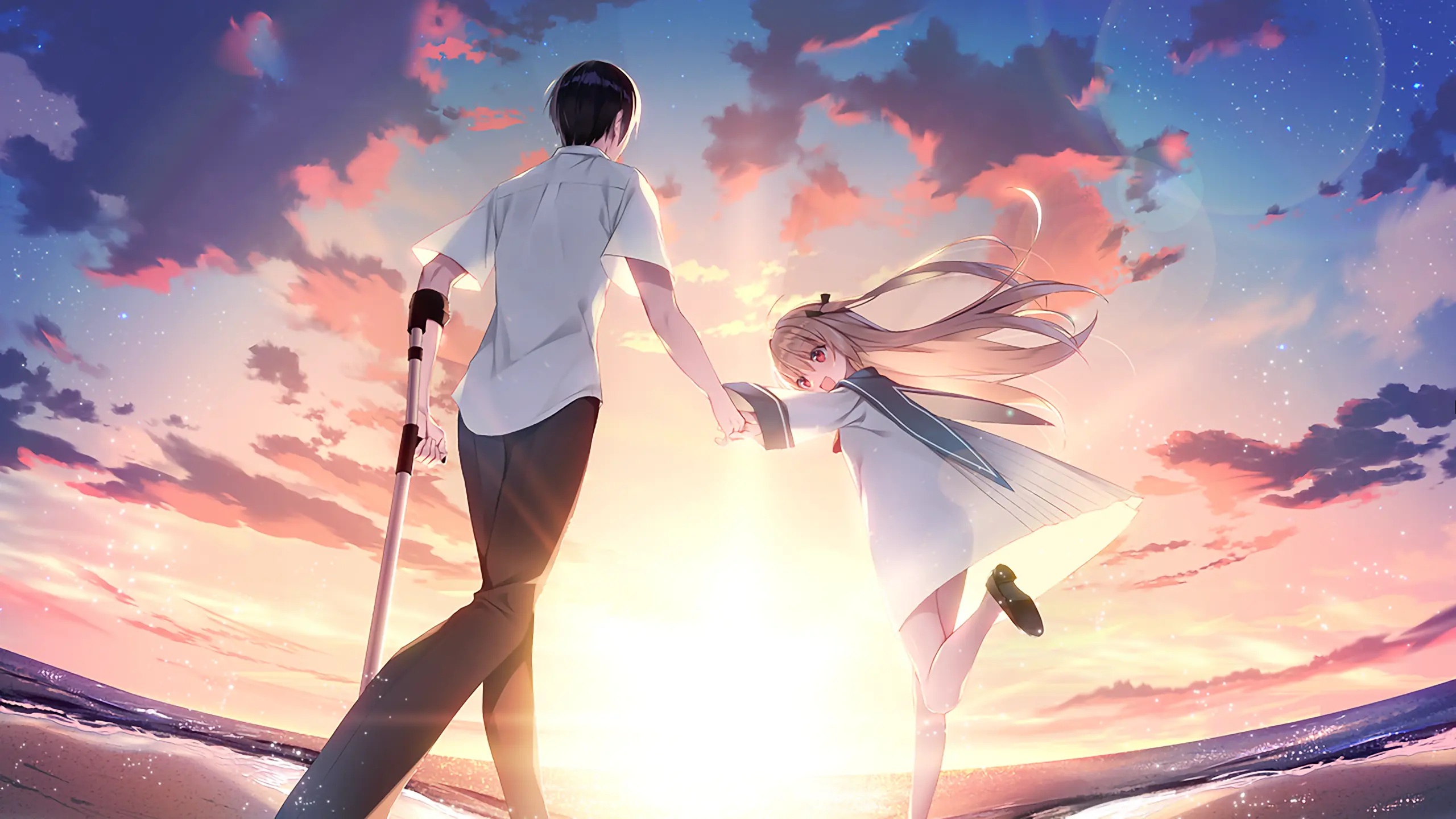
Long after finishing the game, I may forget some events, but I doubt I will forget Atri running beside the sea. The wind catches her skirt, Natsuki struggles to keep up, and the sunset colors the sky in tones that hardly seem real. The image feels like the whole work in miniature: the world is not gentle, and their time together is not long enough, but while their hands are still joined, they should run forward with all their strength.
It also shows how different Natsuki has become from the beginning of the story. At first he has no direction and meets the future with silence. At the end he still wears his prosthetic leg and still must face loss, but now he knows why he is taking the next step. Atri does not erase his pain for him. The forty-five days she spends at his side teach him again to treat the road beneath his feet as a life worth living.
That, I think, is what ATRI -My Dear Moments- left with me.
Not a story about eternity, but about why fleeting things deserve to be remembered forever.